
EIN Civil Society Briefing May 2026 – Belgium, Italy, Republic of Moldova and Romania
/
On May 29th, 2026, EIN held its latest civil society briefing for Permanent Representations of the Council of Europe, ahead of the 1563rd Committee of Ministers Human Rights Meeting which will be held from 9th to 11th June 2026. The briefing focused on the following cases:
Vasilescu v. Belgium group of cases, by Bart De Temmerman, Board Member, Conseil central de surveillance pénitentiaire;
Lavorgna v. Italy, by Nicolleta Velardocchia, Legal Expert, speaking on behalf of StraLi for Strategic Litigation;
T.M. and C.M. v. the Republic of Moldova group of cases, by Violeta Andriuța, Attorney at Law, speaking on behalf of the Roma Women’s Platform ‘ROMNI’;
Atudorei, Centre for legal resources Valentin Campeanu group, Cristian Teodorescu group, N. group, Parascineti and Ticu group v. Romania, by Georgiana Pascu, Co-founder, Advocate for Dignity – Centre for Monitoring and Social Justice.
Vasilescu v. Belgium group of cases

This group of cases concerns the inhuman and degrading conditions of detention suffered by the applicants in Belgian prisons, notably due to overcrowding, lack of sanitation and privacy, exposure to passive smoking, and limited time outside cells (violation of Art. 3). The Court found that these shortcomings reflected structural problems in the Belgian penitentiary system and that no effective domestic remedy was available to challenge such conditions. Under Article 46, the Court called on the authorities to adopt general measures to ensure detention conditions compatible with the Convention and to provide an effective remedy for detainees.
Status of implementation: pending leading case, under enhanced supervision procedure
Final judgment date: 20/04/2015 (more than 11 years)
Recommendations for the implementation of the Vasilescu v. Belgium group of cases
Concerning the Vasilescu v. Belgium group of cases, the Conseil central de surveillance pénitentiaire (CCSP) together with the Federal Institute for the protection and promotion of Human Rights (FIRM) requests the Committee of Ministers to call on the Belgian authorities to:
Consider decisive emergency measures (e.g. royal collective pardon) to resolve the humanitarian crisis of overcrowding without further delay – set goals, monitor results and adjust immediately when results are not achieved – minimum goal: no mattresses on the floor (measures to be taken in the very short term);
Transmit to the Committee on a regular basis detailed information about the effect of the new proposed measures (once entered into force) on prison population;
Take immediately concrete steps to draw up a comprehensive plan to combat overcrowding, based on an integrated and systematic approach to all its factors – make this a widely supported policy choice – invite the Commission on Prison Overcrowding to intensify the implementation of its mandate – appoint additional qualified personnel to work out that comprehensive plan (measures to be taken in the longer term);
Adopt binding prison regulation measures – convince magistracy of the need for such a regulation – make this a widely supported policy choice;
Take immediately concrete steps to establish a specific preventive remedy, capable of rapidly putting an end to violations of Article 3 ECHR;
Eliminating overcrowding will allow for improving detention conditions, improving health care and more activities outside of cell.
In addition, the national institution invites the Committee of Ministers to consider:
Setting a specific timeline for the Government to adopt measures;
Continuing carrying out enhanced supervision of the Government’s progress;
Considering adopting a new Interim Resolution, should the Government fail to comply with the timeline.

The full extent of the Conseil central de surveillance pénitentiaire (CCSP) and the Federal Institute for the protection and promotion of Human Rights (FIRM)’s arguments and recommendations can be found in their Rule 9.2 communication submitted ahead of the June 2026 CM/DH:
Other civil society observations and recommendations submitted through Rule 9 ahead of the June 2026 CM/DH meeting include:
Lavorgna v. Italy case
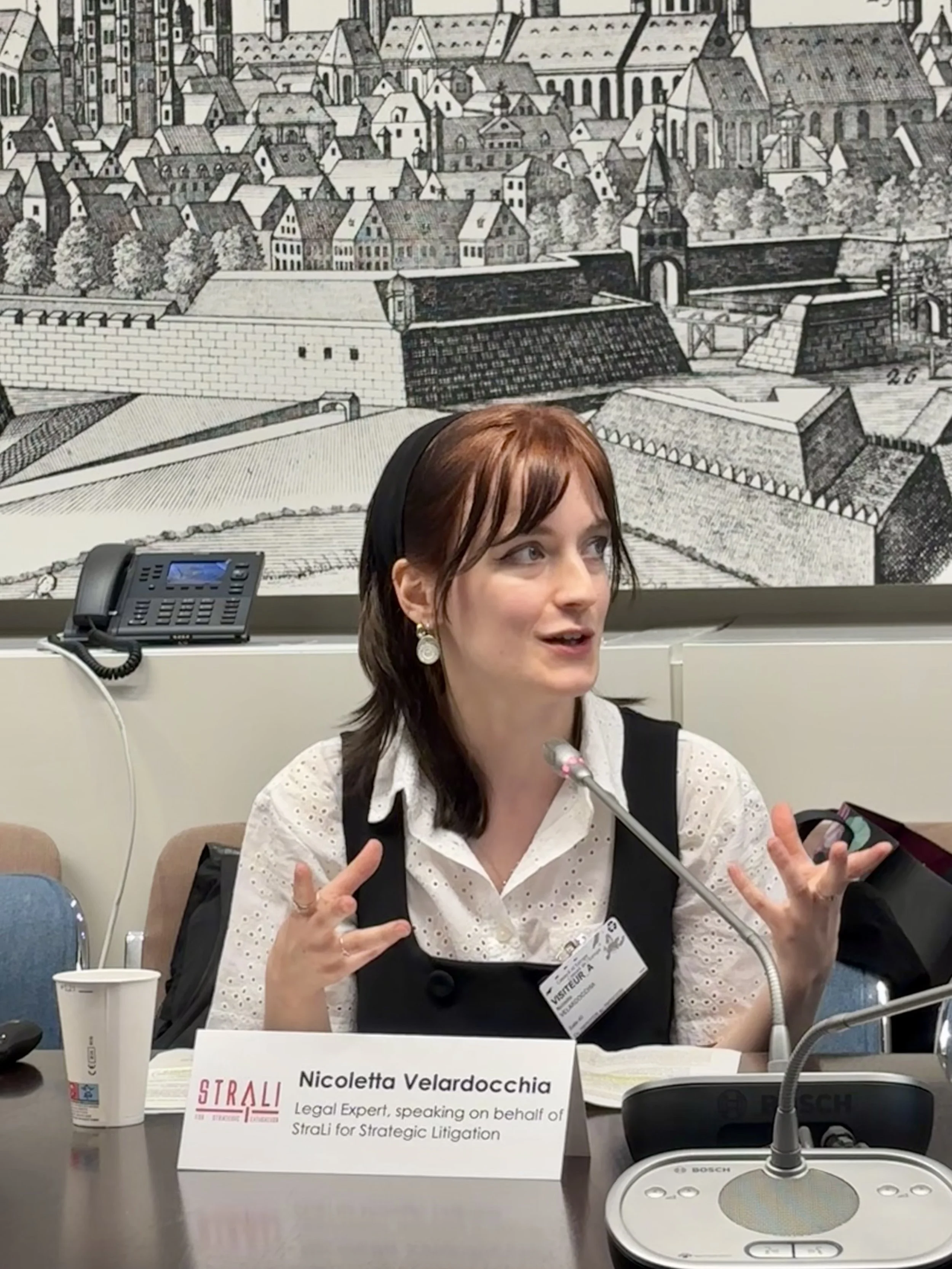
This case concerns the prolonged use of mechanical restraint on the applicant during his hospitalisation in a psychiatric ward, in a context that evolved into involuntary treatment. The Court found that, although the initial use of restraint could be justified by the applicant’s violent conduct, its continuation for almost eight consecutive days was not strictly necessary and amounted to inhuman and degrading treatment (violation of Art. 3). The Court also found that the subsequent investigation into the applicant’s allegations of ill-treatment was ineffective due to its excessive length and the authorities’ failure to adequately assess the necessity and proportionality of the measure (procedural violation of Art. 3).
Status of implementation: pending leading case, under enhanced supervision procedure
Final judgment date: 07/02/2025 (1 year and 3 months)
Recommendations for the implementation of the Lavorgna v. Italy case
Concerning the Lavorgna v. Italy case, StraLi requests the Committee of Ministers to call on the Italian authorities to:
To adopt a binding and precise primary legislative framework, to ensure that the use of mechanical restraint is strictly prohibited unless it is carried out in accordance with clearly defined, ex ante conditions, governed by precise and foreseeable criteria that effectively constrain discretion.
To adopt the necessary legislative and administrative measures to ensure that all instances of mechanical restraint are subject to oversight mechanisms that are independent and external;
To adopt the necessary legislative and administrative measures to ensure that:
All regions are subject to a clear and binding obligation to carry out systematic data collection and to transmit it to competent national authorities. Such data shall include the number and duration of instances of mechanical restraint, the justification for their use, the frequency and outcome of periodic reassessments, any adverse events or injuries, and the use of alternative, less restrictive measures prior to restraints;
Data collection is conducted in accordance with uniform, nationwide criteria, ensuring consistency and comparability across the national territory;
Data collected on the duration, circumstances and methods leading to the use of mechanical restraint are subject to effective, centralised and continuous monitoring by the national authorities.
To adopt the necessary legislative and administrative measures to ensure:
Adequate staffing levels in in all settings where psychiatric care is provided;
That staff are properly trained in de-escalation techniques and alternative measures to restraint.
To allocate adequate financial resources to ensure the effective implementation of the above measures.

The full extent of StraLi’s arguments and recommendations can be found in their Rule 9.2 communication submitted ahead of the June 2026 CM/DH:
Other civil society observations and recommendations submitted through Rule 9 ahead of the June 2026 CM/DH meeting include:
T.M. and C.M. v. the Republic of Moldova group of cases
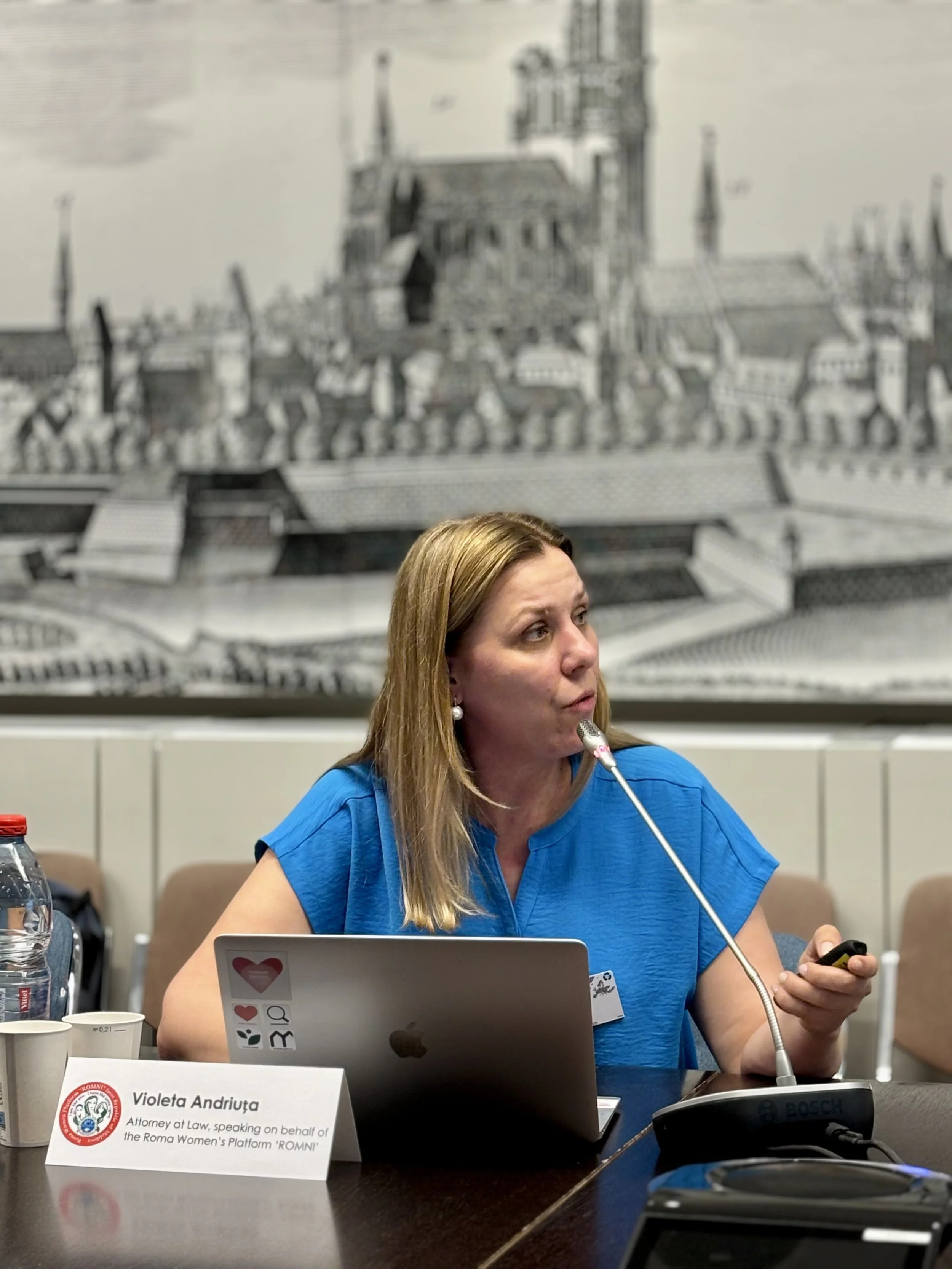
This group of cases concerns failures by the Moldovan authorities, between 2009 and 2019, to respond effectively to domestic violence complaints. The Court found that the authorities failed to take preventive and protective measures despite being aware of the risk of further violence, delayed the enforcement of protection orders, and failed to adequately protect victims and their children (violations of Art. 3 and 8). Lastly, the authorities’ repeated failure or delay in addressing violence against the applicants was found to be discriminatory towards them as women (violation of Art. 14 in conjunction with Art. 3).
Status of implementation: pending leading case, under enhanced supervision procedure
Final judgment date: 28/04/2014 (more than 12 years)
Recommendations for the implementation of the T.M. and C.M. v. the Republic of Moldova group of cases
Concerning individual measures in the T.M. and C.M. v. the Republic of Moldova group of cases, the Roma Women’s Platform ‘ROMNI’ requests the Committee of Ministers to call on the Moldovan authorities to:
Reopen and effectively conduct the investigation into the death in the Vieru case, with a full assessment of the context of domestic violence and a possible legal classification as domestic violence resulting in death or gender-motivated murder, in line with the pattern established by the Court.
With regard to general measures, civil society requests the Committee of Ministers to call on the Moldovan authorities to:
Ensure the applicability of the law and the protection of victim; it is recommended to harmonize the Special Part of the Criminal Code with the definition in the General Part, by creating a distinct in crimination for femicide and establishing sanctions proportionate to its gravity;
Address the high level of impunity identified by the Court in the T.M. and C.M. group of cases, the following measures are required:
Elimination of administrative liability: Authorities must repeal provisions allowing administrative sanctions for acts of domestic violence, as they fail to deter perpetrators and do not provide real protection for victims;
Correcting the stagnation of criminal cases: This reform is essential to reverse the trend of stagnant criminal case numbers observed since 2017, despite the annual rise in complaints and the number of administrative cases;
Amend Article 60 of the Criminal Code by including human rights violations established by the European Court of Human Rights in the list of exceptions to the application of limitation periods. In this way, the statute of limitations would no longer prevent the reopening or continuation of criminal proceedings following a judgment of the European Court of Human Rights finding a violation of the Convention.

The full extent of the Roma Women’s Platform’s arguments and recommendations can be found in their Rule 9.2 communication submitted ahead of the June 2026 CM/DH:
Atudorei, Centre for legal resources Valentin Campeanu group, Cristian Teodorescu group, N. group, Parascineti and Ticu group v. Romania
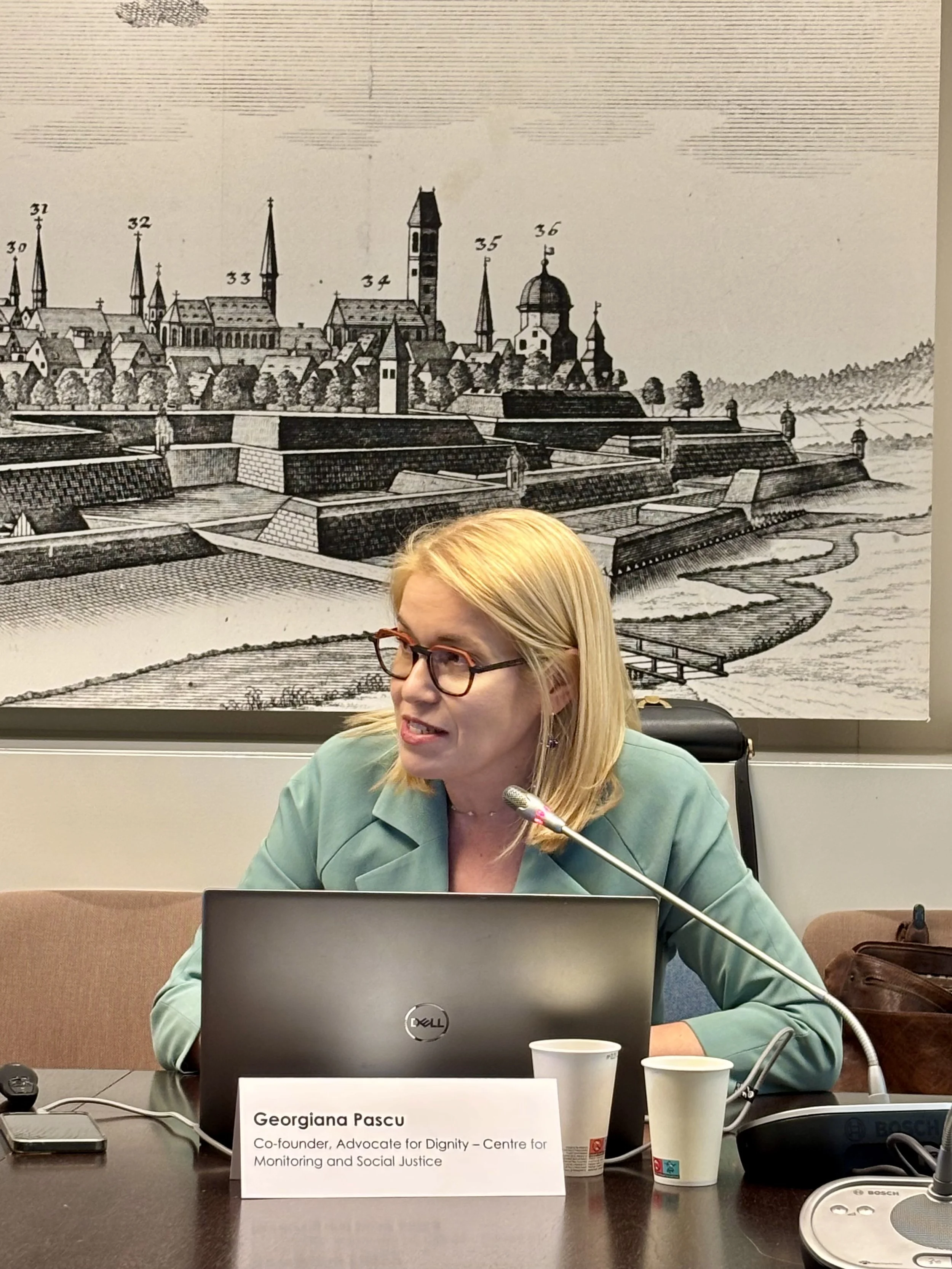
These groups of cases concern systemic failures in Romania’s psychiatric and residential care institutions affecting persons with psychosocial and intellectual disabilities. The Court found structural shortcomings relating to unlawful or arbitrary deprivation of liberty, inhuman and degrading living conditions and treatment, lack of informed consent for psychiatric care, ineffective procedural safeguards and judicial review, and the failure to effectively investigate allegations of ill-treatment and deaths in institutional care (violations of Arts. 2, 3, 5 and 8). The cases also highlighted the absence of effective legal representation and independent oversight, as well as the prolonged institutionalisation of persons with disabilities in conditions incompatible with human dignity.
Status of implementation: pending leading and repetitive cases, under enhanced supervision procedure
Final judgment date: from between 14 years to 8 years
Recommendations for the implementation of the Atudorei, Centre for legal resources Valentin Campeanu group, Cristian Teodorescu group, N. group, Parascineti and Ticu group v. Romania
Concerning the Atudorei, Centre for legal resources Valentin Campeanu group, Cristian Teodorescu group, N. group, Parascineti and Ticu group v. Romania, Advocate for Dignity – Centre for Monitoring and Social Justice and Something to Say requests the Committee of Ministers to call on the Romanian authorities to:
Urgently call upon Romania to submit an updated Action Plan addressing the specific shortcomings identified in these judgments, including concrete legislative proposals, timelines and budgetary commitments;
Request the Romanian authorities to initiate an effective, independent criminal investigation into the injuries sustained by patient P.C. on or around 16 April 2026 at SPMS Jebel;
Call upon Romania to enact a legislative framework establishing clear, time-limited criteria for the imposition and periodic judicial review of psychiatric security measures, while identifying solutions;
Call upon Romania to ensure effective legal assistance for all persons detained under compulsory psychiatric measures in closed institutions;
Call upon Romania to develop adequate community-based alternatives to forensic psychiatric hospitalisation;
Call upon Romania to conduct regular and unannounced monitoring visits to forensic psychiatric hospitals and to communicate the conclusions of such visits to the Committee;
Call upon Romania to take immediate measures to ensure that independent monitoring pursuant to Law no. 8/2016 is not obstructed;
Take note of the Ministry of Health failure to conduct the announced inspection of SPMS Jebel following the January 2026 complaint, and call upon the Romanian authorities to ensure that supervisory responsibilities are discharged effectively and without undue delay;
Call upon Romania to provide serious, specialised and recurrent training for judges, prosecutors and ex officio lawyers on the substantive and procedural requirements of Law no. 140/2022 on protection measures for persons with intellectual and psychosocial disabilities;
Call upon Romania to urgently examine why children in the care of DGASPC who lack legal capacity are not being assigned an independent personal representative under Law no. 140/2022;
Call upon Romania to pilot, without further delay, supported decision-making services and the personal representative institution as required by Law no. 140/2022;
Call upon Romania to allocate dedicated public funding enabling human rights NGOs and self-advocate organisations to conduct unannounced monitoring visits to residential institutions and psychiatric hospitals;
Call upon Romania to ensure that all persons in psychiatric detention and residential care institutions have access to effective legal assistance and to a genuine complaints mechanism;
Call upon Romania to establish an effective, centralised mechanism for the systematic review of ALL deaths of persons in residential institutional care covering the 998 deaths notified to the Monitoring Council in 2025 and the 301 deaths notified in the first three months of 2026 alone;
Separately and urgently investigate the anomalous concentration of child deaths in DGASPC Mures residential centres 10 deaths of children with disabilities in the period 1 January 2024 to 1 March 2026, against a national background in which 5 counties recorded zero deaths, 7 counties recorded one death and 6 counties recorded three deaths in the same institutional type and period as a matter requiring immediate central intervention;
The full extent of the Advocate for Dignity – Centre for Monitoring and Social Justice and Something to Say’s arguments and recommendations can be found in their Rule 9.2 communication submitted ahead of the June 2026 CM/DH:
Other observations and recommendations from national institutions submitted through Rule 9 ahead of the June 2026 CM/DH meeting include: