
EIN Civil Society Briefing September 2026 – Greece & Hungary
/
On September 7th, 2026, EIN held its latest civil society briefing for Permanent Representations of the Council of Europe, ahead of the 1569th Committee of Ministers Human Rights Meeting which will be held from 15th to 17th September 2026. The briefing focused on the following cases:
A.R.E. v. Greece, by Alexandros Konstantinou, Attorney at Law, Greek Council for Refugees (GCR);
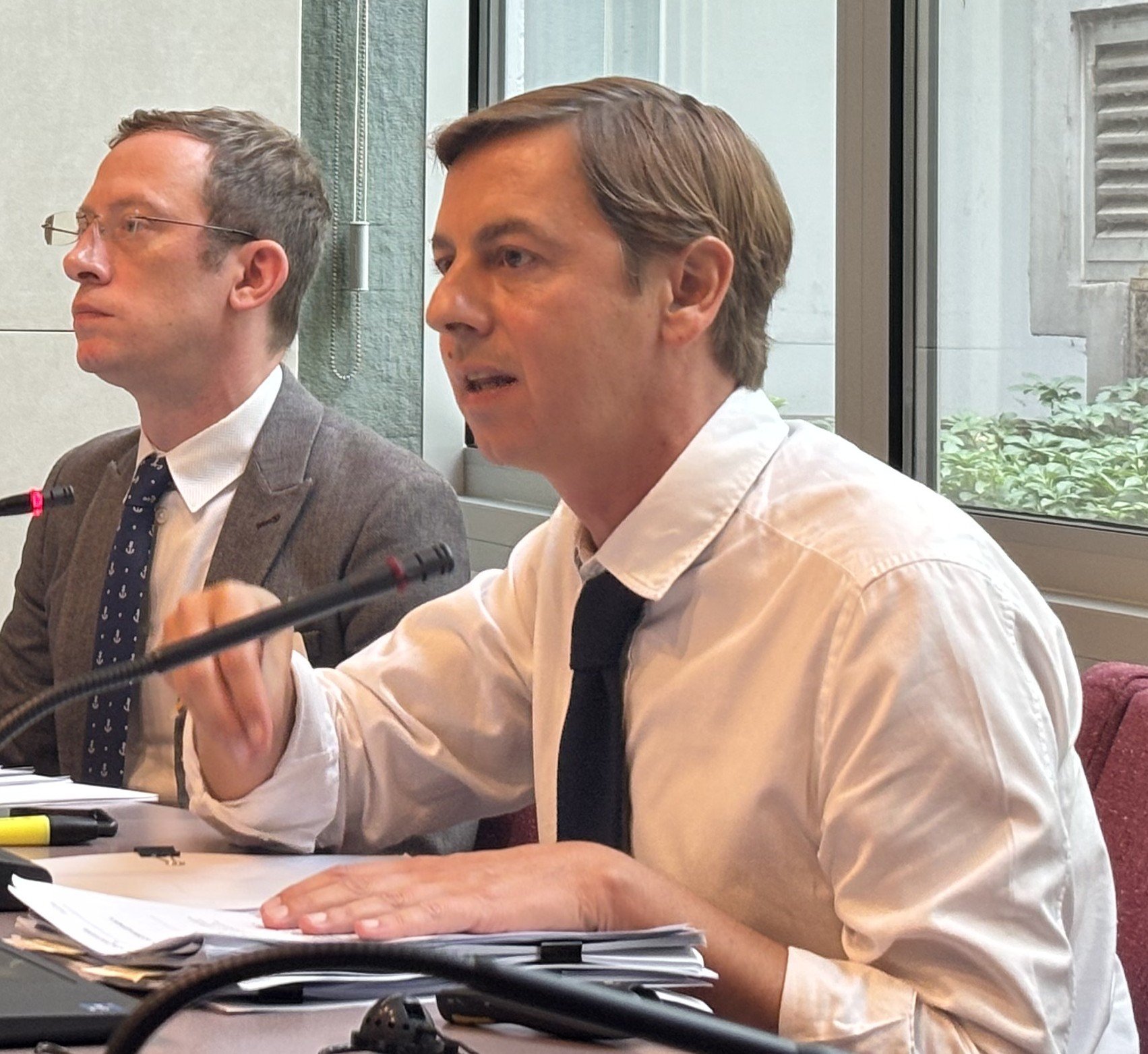
Ilias and Ahmed v. Hungary group, Shahzad v. Hungary group, M.D. and Others v. Hungary, and H.Q. and Others v. Hungary, by András Léderer, Head of Advocacy, Hungarian Helsinki Committee (HHC);
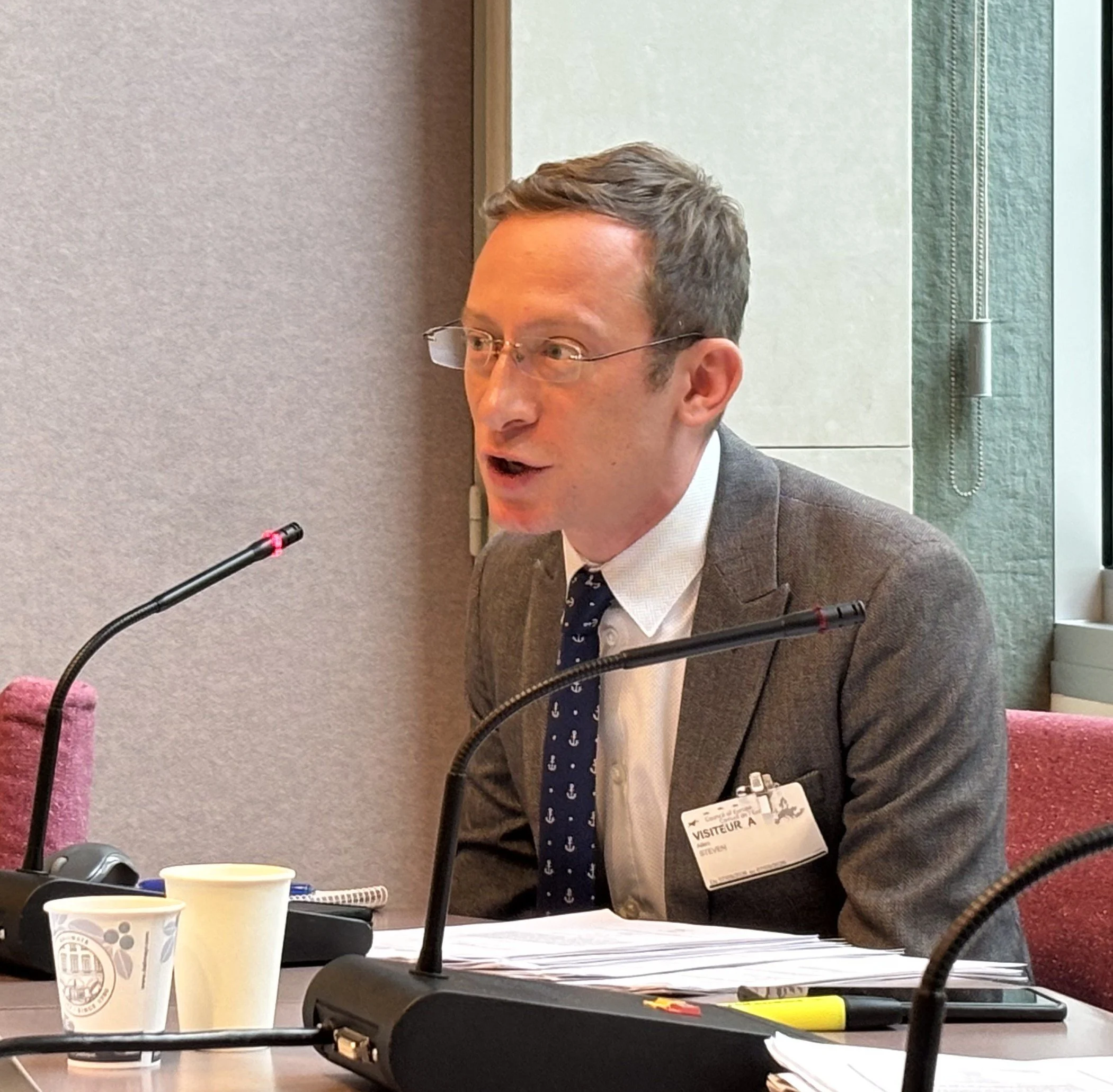
Validity Foundation on behalf of T.J. v. Hungary, by Steven Allen, Executive Director, Validy Foundation.

This master group of cases concerns Hungary’s treatment and removal of asylum-seekers to Serbia, including the failure to properly assess their protection needs and provide effective safeguards against removal.
The Ilias and Ahmed group concerns asylum-seekers who were removed from Hungary to Serbia between 2015 and 2019 without their asylum claims being properly examined. The Court found that the Hungarian authorities had not adequately assessed whether they would have access in Serbia to a proper asylum procedure and protection against being returned to a country where they might face ill-treatment (violation of Article 3).
The Shahzad group concerns asylum-seekers who were removed to Serbia under Hungary’s “apprehension and escort” procedure, without an individual assessment or a formal removal decision. The Court found that these removals amounted to collective expulsions and that the applicants had no effective remedy to challenge them (violations of Article 4 of Protocol No. 4 and Article 13).
In M.D. and Others, an Afghan family was removed from Hungary to Serbia in 2019 after the 17-year-old son signed a “voluntary return” statement. The Court found that the family had been compelled to leave and that this amounted to a collective expulsion (violation of Article 4 of Protocol No. 4).
Status of implementation: pending leading case, under enhanced supervision procedure
Final judgment date: from between 6 years and 9 months to 1 year old
Recommendations for the implementation of Ilias and Ahmed v. Hungary group, Shahzad v. Hungary group, M.D. and Others v. Hungary, and H.Q. and Others v. Hungary
Concerning Ilias and Ahmed v. Hungary group, Shahzad v. Hungary group, M.D. and Others v. Hungary, and H.Q. and Others v. Hungary, the Hungarian Helsinki Committee (HHC) respectfully invites the Committee of Ministers to maintain its enhanced supervision of these cases and to invite the Government to submit, taking into account the prolonged lack of execution, by December 2026, a comprehensive Action Plan containing concrete legislative and administrative measures together with an implementation timetable capable of achieving the full execution of these judgments. The HHC also respectfully invites the Committee of Ministers to encourage the Government to make use of the expertise of UNHCR and relevant civil society organisations in preparing and implementing the measures necessary for the execution of these judgments.
To resolve the key outstanding issues identified by the Court and the Committee in the present cases, at a minimum, the following legislative measures are required:
Terminate / refrain from prolonging the state of crisis due to mass migration that is currently in force until 7 September 2026.1 The termination of the state of crisis would remove the legal ground to carry out collective expulsions (“escorts” as per the State Borders Act) from the entire territory of Hungary.2
Repeal Section 5 (1a) of the State Borders Act that allows for the collective expulsion from an 8 kilometers zone from the external Schengen borders (the rules applicable at the material time of the Shahzad v. Hungary no I., and the H.K. v. Hungary cases) as the termination of the state of crisis would leave this provision intact.
Repeal the so-called embassy system, currently in force as part of Act L of 2025,3 to ensure effective access to asylum.
In case of the termination of the embassy system, regardless of the potential termination of the state of crisis, amend the Asylum Act4 to bring the provisions regulating the compulsory stay in transit zones in line with the judgments of the ECtHR and the CJEU.5
Restore the definition of refugee in place prior to the 7th Amendment to the Fundamental Law, in force since 2018, to exclude the possibility of automatically applying the concept of safe third country without individual assessment or the effective possibility to rebut such presumption individually.
Amend the Act CX on the General Rules on the Entry and Stay of Third-Country Nationals (GRTCN Act) and Government Decree 35/2024. (II. 29.) to be in line with non-refoulement obligations.6
Repeal Section 101(2a) of GRTCN Act, which does not permit recourse to a suspensive effect in administrative actions against a final decision ordering expulsion.
These measures are closely interconnected. Only partial implementation would not be sufficient to eliminate the structural causes underlying the violations found by the Court. However, pending the adoption of the necessary legislative amendments, the Government can and should ensure that no collective expulsions are carried out in practice and that every person expressing a wish to seek international protection is granted effective access to an individual asylum procedure.

The full extent of the Hungarian Helsinki Committee’s arguments and recommendations can be found in their Rule 9.2 communication submitted ahead of the September 2026 CM/DH:
The case concerns the applicant’s “pushback” from Greece to Türkiye in May 2019 and the absence of effective remedies. The Court found strong indications of a systematic practice of pushbacks by Greek authorities in the Evros region and held that the applicant, who had entered Greece via the Evros River, was returned to Türkiye without access to the asylum procedure. Despite expressing fears of ill-treatment, her request for international protection was ignored and no assessment was made of the risks she faced, resulting in violations of Articles 3 and 13 of the Convention. The Court also found that her informal detention before the pushback had no legal basis (violation of Article 5 §§ 1, 2 and 4). Finally, the national legal system did not provide an effective remedy for alleged violations of Articles 2 and 3 during the pushback, and the investigation into her criminal complaint was inadequate (violation of Article 13 in conjunction with Articles 2 and 3).
Status of implementation: pending leading case, under enhanced supervision procedure
Final judgment date: 30/06/2025 (1 year)
Recommendations for the implementation of A.R.E. v. Greece
Concerning the A.R.E. v. Greece case, the Greek Council for Refugees requests the Committee of Ministers to call on the Greek authorities to:
Recognise that there is a systematic practice of pushbacks of foreign nationals by the Greek authorities from the Evros region to Turkey, the seriousness of these violations, and the need to hold potential perpetrators accountable;
Re-open at the domestic level the criminal case concerning the applicant in A.R.E. v. Greece;
Issue a Circular by the Directorate of the Hellenic Police and the Hellenic Coast Guard setting out the formal duties of staff under national and EU legislation and the ECHR, explicitly stating that pushbacks are contrary to the ECHR and national legislation and may entail criminal liability;
Install surveillance and recording systems in all law enforcement detention facilities and ensure the mandatory retention of relevant footage for three months, or longer where complaints or investigations are pending;
Activate cameras on Hellenic Coast Guard vessels in situations involving encounters with other vessels and ensure the mandatory retention of relevant footage for three months, or longer where complaints or investigations are pending;
Retain and make available footage from surveillance cameras operating at the Evros land border in cases of complaints or investigations;
Organise targeted, wide-scale training for prosecutors and judges dealing with pushback cases;
Issue a Circular by the Public Prosecutor of the Supreme Court to all prosecutorial authorities setting out the actions required when examining complaints or cases involving allegations of pushbacks, including the proper examination of witness statements, case-file materials and audiovisual evidence;
Ensure that general assertions that pushback practices are not applied by Greek law enforcement bodies are not considered sufficient grounds for dismissing complaints;
Ensure that the absence of formal recording of a person by the authorities is not treated as an irrebuttable presumption that the person was not present on Greek territory;
Introduce an effective preventive remedy for allegations of pushbacks;
Regularly collect and publicly disclose credible statistical data on pushback cases examined by the judicial authorities and their outcomes.
The full extent of the Greek Council for Refugees’s arguments and recommendations can be found in their Rule 9.2 communication submitted ahead of the September 2026 CM/DH:
The case concerns the deficiencies in the medical and social care provided in a social care home to T.J., a person diagnosed with a severe intellectual disability, and the lack of an effective investigation into her death in 2018 (substantive and procedural violation of Article 2). T.J. was represented by Validity Foundation, an international non-governmental organisation based in Budapest.
The European Court found that the domestic authorities were fully aware of the inadequate living conditions at the social care home, including the shortage of staff, the insufficient medical and therapeutic care, the excessive use of means of restraint, as well as the particular risk the deceased faced. The European Court further considered that it was not demonstrated that the authorities had had the requisite standard of protection that would have enabled them to prevent the deterioration in health and untimely death of T.J., who was under the State’s exclusive control (§§ 94-96).
As regards the effectiveness of the domestic investigation, the Court found that the authorities’ failure to subject T.J.’s case to the required careful scrutiny as well as the absence of any appropriate reaction, let alone redress, with respect to the events complained of were incompatible with their procedural obligations under Article 2 (§ 106).
Status of implementation: pending leading case, under enhanced supervision procedure
Final judgment date: 10/01/2025 (1 year and 6 months)
Recommendations for the implementation of Validity Foundation on behalf of T.J. v. Hungary
Concerning the Validity Foundation on behalf of T.J. v. Hungary case, the Validity Foundation requests the Committee of Ministers to:
Continue the supervision of the execution focusing on addressing structural issues that are capable of preventing re-occurrence of Article 2 violations;
In addition, it request the Committee of Ministers to call on the Hungarian authorities to:
Reopen Article 2-compliant investigations into the death of T.J., other residents of Topház, and into all deaths in social care settings: automatic,independent, public scrutiny, independent evidence, with real expertise. Areas toinvestigate include: support in the community to prevent institutionalisation, access tohabilitation, rehabilitation, information, communication and individual planning,supported decision-making, disability-specific forms of restraint, deinstitutionalisation (not purely a classic forensic investigation);
Recognise that conditions in social care settings are a function of the current outdated institutional system of social care and require fundamental reform to prevent further violations (Articles 2, 3, 5, 8, etc.);
Undertake a structural deinstitutionalisation reform that will prevent further violations, in accordance with Hungary’s international obligations under Article 19 of the CRPD;
Reorient the national deinstitutionalisation strategy to recognise that “supported housing” and other congregate settings remain institutions, and prioritise accessible housing, individualised services and accessible public services;
Amend legislation to recognise all deaths in social care settings, whether residential or not, as automatically “extraordinary”, triggering Article 2-compliant investigations;
Release data on deaths in social care since 2017, disaggregated by setting, age, gender and impairment, including information on post-death investigations, remedial measures addressing structural deficiencies, and independent representation of the deceased person’s interests;
Abolish guardianship and replace it with supported decision-making and a right to independent legal representation, in line with Articles 12 and 13 of the CRPD, to ensure access to justice, investigations and remedies;
Strengthen independent monitoring with civil society, in accordance with applicable UN and Council of Europe standards, and ensure civil society access to all institutions;
Ensure that future action plans are co-developed with persons with disabilities, their representative organisations and wider civil society.

The full extent of the Validity Foundation’s arguments and recommendations can be found in their Rule 9.2 communication submitted ahead of the September 2026 CM/DH: