EIN Civil Society Briefing February 2026 – Georgia, Greece and Ukraine
/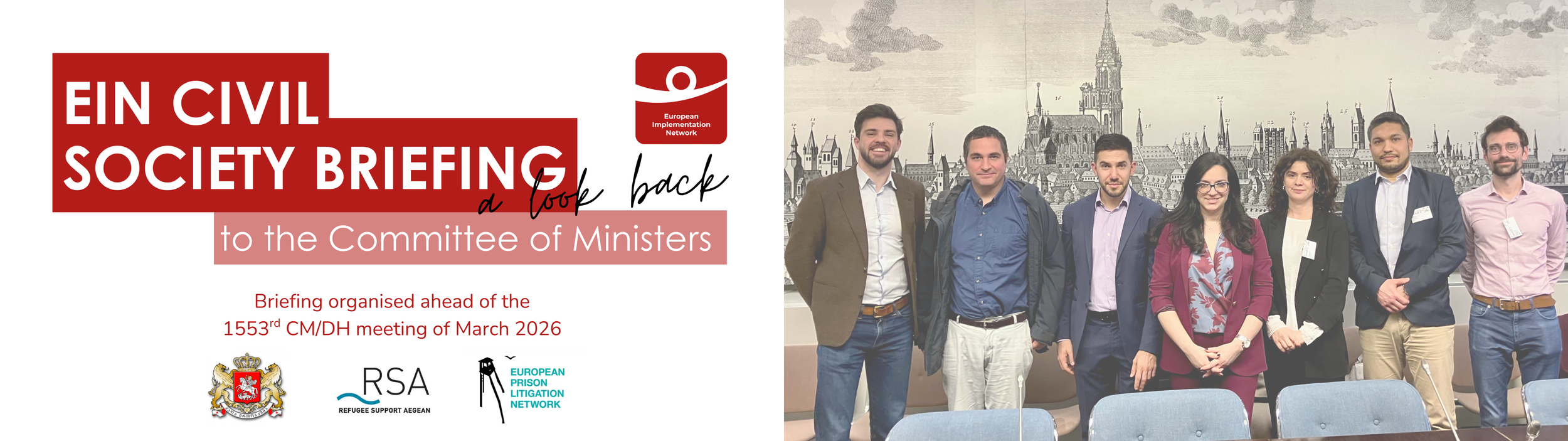
On February 27th, 2026, EIN held its latest civil society briefing for Permanent Representations of the Council of Europe, ahead of the 1553rd Committee of Ministers Human Rights Meeting which will be held from 9th to 11th March 2026. The briefing focused on the following cases:
Tsintsabadze v. Georgia group of cases, by Tamar Abazadze, Head of Analytical Department, Public Defender’s Office of Georgia;
Alkhatib and Others v. Greece group of cases, by Minos Mouzourakis, Legal and Advocacy Officer, Refugee Support Aegean (RSA);
Karabet and Others v. Ukraine group of cases, by Hugues De Suremain, Legal Director, European Prison Litigation Network (EPLN).
Tsintsabadze v. Georgia group of cases
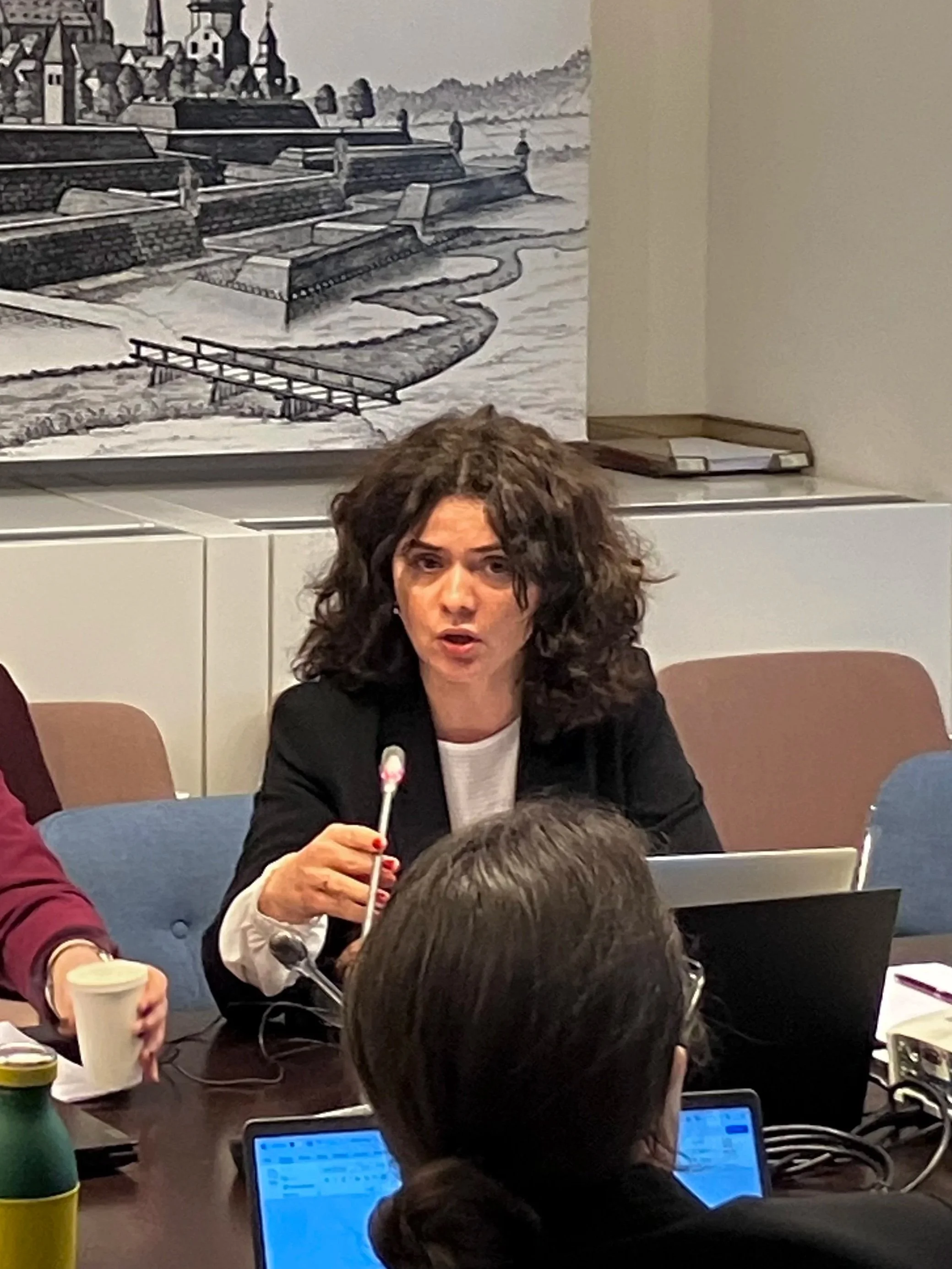
This group of cases concerns numerous substantive and procedural violations of Articles 2 and 3 of the Convention in relation to deaths in custody, torture, ill-treatment, and excessive use of force between 1999 and 2014, as well as ineffective investigations into these incidents up to 2022. The violations, mostly attributable to law enforcement and prison staff, include failures to conduct prompt, independent, and thorough investigations, the absence of forensic and medical expertise, and shortcomings in judicial proceedings, including lenient sentencing. In nine friendly settlements, the authorities acknowledged similar procedural violations and expressed committment to conduct effective investigations.
Recommendations for the implementation of the Tsintsabadze v. Georgia group of cases
Concerning the Tsintsabadze v. Georgia group of cases, the Public Defender of Georgia requests the Committee of Ministers to call on the Georgian authorities to:
Immediately rectify procedural shortcomings by ensuring effective investigations of cases of ill-treatment committed by law enforcement officers; systematically suspending officials under credible suspicion of abuse, and publicly reporting on the outcomes of all investigations;
Amend the legislation in order to ensure:
The visible identification of officers;
The comprehensive audio-video recording of operations;
The full documentation of planning phases, and guaranteed preservation of suchrecords.
Call for immediate steps to revise the Criminal Code and relevant procedural norms to prevent misclassification of ill-treatment offences.
The full extent of the Public Defender’s arguments and recommendations can be found in their Rule 9.2 communication submitted ahead of the March 2026 CM/DH:
Alkhatib and Others v. Greece group of cases
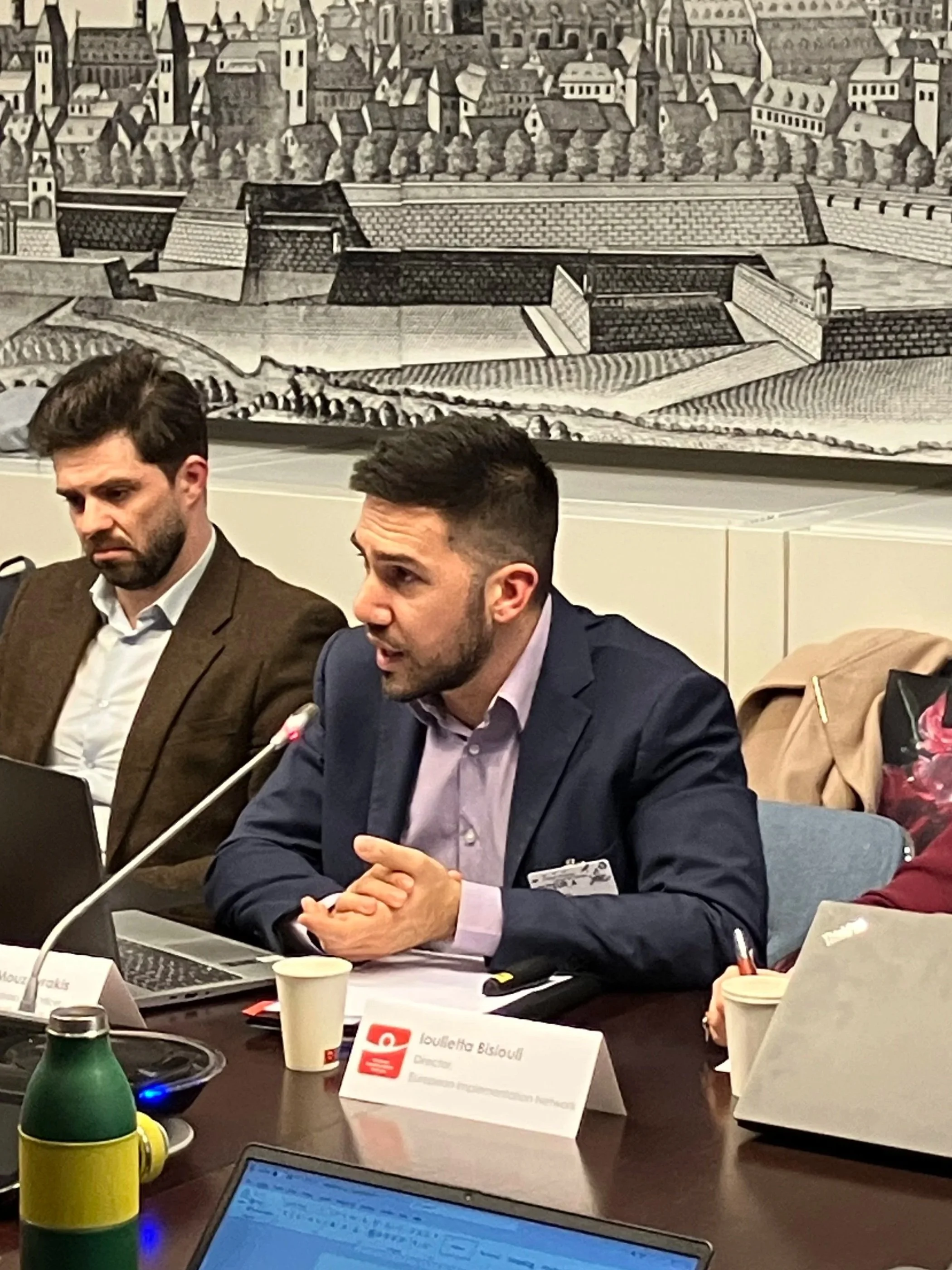
This group of cases concerns ill-treatment by Greek law enforcement (violations of Art. 3) and serious failures to investigate deaths, torture, and other forms of ill-treatment in police and coastguard operations (violations of Art. 2 and 3). In one case, the authorities also failed to examine possible discrimination on grounds of Roma origin (violation of Art. 14 taken together with Art. 3). The group further includes coastguard interception operations in 2014–2015, where deaths and serious injuries were not effectively investigated and the use of force was neither shown to be absolutely necessary nor conducted so as to minimise risks to life (violations of Art. 2).
Recommendations for the implementation of the Alkhatib and Others v. Greece group of cases
Concerning substantive obligations under Article 2, in the Alkhatib and Others v. Greece group of cases, Refugee Support Aegean and PRO ASYL ask the Committee of Ministers to call on the Greek authorities to:
Revise the legal and regulatory framework governing rules of engagement to ensure full compliance with international and European standards, including SOLAS and Regulation (EU) 656/2014;
Adopt and publish clear, publicly accessible operational instructions on the handling of arrivals of boats carrying refugees, with specific guidance on:
Systematically assessing distress phases and promptly activating appropriate search and rescue (SAR) operations to safeguard lives;
Prioritising the protection of passengers’ lives as the paramount consideration at every stage of maritime operations;
Prohibiting and effectively ending extremely dangerous practices, including abandoning individuals adrift on inflatable devices, towing vessels in unsafe conditions, creating waves to destabilise boats, and deliberately colliding with vessels.
Ensure the provision of adequate interpretation services within EKSED and the 112 hotline to facilitate effective communication with non-Greek speakers;
Mandate the full audio and video recording of all Coast Guard vessel courses to strengthen transparency and accountability.
Second, regarding procedural obligations under Article 2, and in order to ensure effective, independent and thorough investigations, civil society requests the Committee to call on the Greek authorities to:
Adopt clear, binding, and publicly accessible instructions to prosecutorial authorities, ensuring that the following standards are systematically met:
Investigative acts must be conducted directly and exclusively by the competent Naval Court Prosecutor, and not by Coast Guard officers;
Prosecutors must ensure that testimonies are collected from all passengers and potential witnesses, with adequate interpretation services;
Prosecutors must summon and question all officers on duty at the date and time of the alleged incident;
Inspections and forensic examinations must be conducted and delivered promptly, carried out independently and meet standards of adequacy and reliability;
The standard of “sufficient indications” must be interpreted consistently with Convention requirements and the evidentiary threshold in preliminary examinations must not impose an excessive burden of proof on victims.
Finally, concerning the supervision process, civil society further requests that the CM:
Supervise Alkhatib and Others and Almukhlas and Al-Maliki v. Greece separately from the Sidiropoulos and Papakostas v. Greece group of cases, as they concern distinct violations and require tailored execution measures;
Group and place the Alkhatib and Others, Almukhlas and Al-Maliki, Safi and Others v. Greece, and F.M. v. Greece groups of cases under enhanced supervision, given the existence of common complex and structural problems affecting the effectiveness of criminal investigations under Article 2 ECHR.
The full extent of civil society arguments and recommendations can be found in their Rule 9.2 communication submitted ahead of the March 2026 CM/DH:
Karabet and Others v. Ukraine group of cases
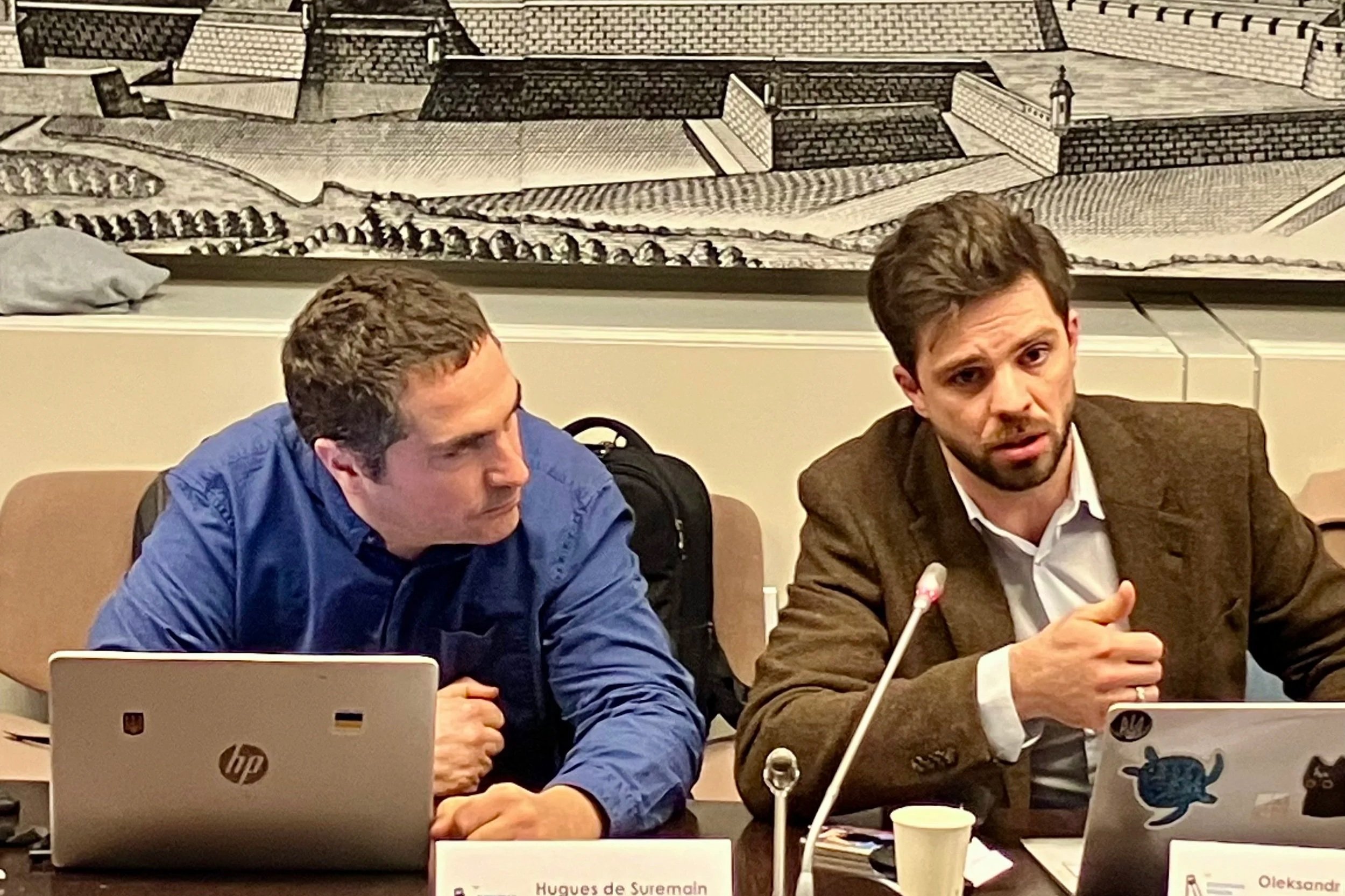
This group of cases concerns large-scale violence against prisoners by special forces, rapid reaction units, and prison staff in Ukrainian prisons, and the authorities’ failure to carry out effective investigations. The Court found that detainees were subjected to torture or inhuman and degrading treatment, either as punishment or during prison “training exercises” (violations of Art. 3). In Karabet and Others, the ill-treatment occurred in January 2007 in Izyaslav prison during an intervention to suppress a hunger strike protesting detention conditions; the Court also found a violation of Art. 1 of Prot. No. 1 due to the failure to return confiscated personal belongings. The Court also found a number of other violations which are being examined by the Committee of Ministers in different cases or groups of cases.
Recommendations for the implementation of the Karabet and Others v. Ukraine group of cases
Concerning the Karabet and Others v. Ukraine group of cases, the European Prison Litigation Network (EPLN), Protection of Prisoners of Ukraine, and the Kharkiv Human Rights Group jointly request the Committee of Ministers to call on the Ukrainian authorities to:
Demilitarise prison security functions;
Adopt a comprehensive legislative framework that clearly defines the use of special forces as a measure of last resort, subjects their deployment to strict external oversight, regulating the use of force in full compliance with ECtHR case law;
Create a platform on fight against impunity bringing together CSOs, Office of the Prosecutor General (OPG), the State Bureau of Investigation (SBI) and the Ombudsperson (as required by the European Commission);
Introduce annual public reporting to the Parliament by the OPG and SBI on investigations into torture, victims’ protection;
Guarantee independent oversight and effective complaint mechanisms;
Take into account the revised Directive 2012/29/EU on victims’ rights, soon to enter into force;
Ensure independent investigations, fully separate from penitentiary and executive structures;
Reform the SBI’s safeguards and oversight framework.
In addition, civil society requests that the CM:
Maintain the supervision of the Karabet and Others and Davydov and Others v. Ukraine groups of cases under enhanced procedure;
Ensure the coherence of its decisions with European Commission monitoring;
Request the authorities to provide disaggregated data on:
Deployment of special units;
Complaints;
Investigations;
Cases referred to court;
Convictions;
Disciplinary proceedings.
Request detailed time-bound roadmap addressing structural causes.
The full extent of civil society arguments and recommendations can be found in their Rule 9.2 communication submitted ahead of the March 2026 CM/DH: