From Strasbourg to Luxembourg: Launching SURE to Close the Human Rights Implementation Gap
/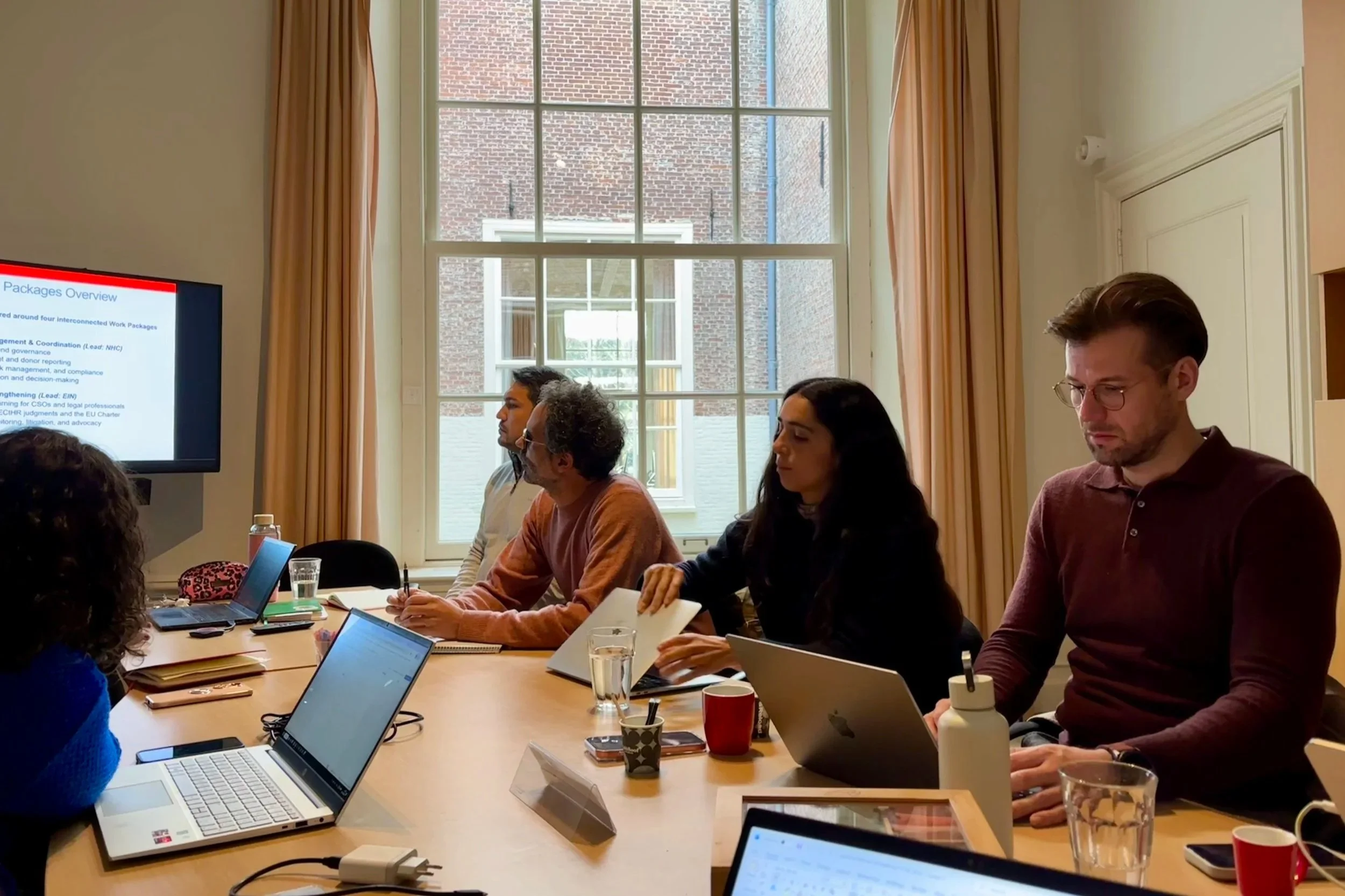
On 2 and 3 February 2026, our member, the Netherlands Helsinki Committee (NHC), hosted the kick-off meeting of the Standing Up for Rights in Europe (SURE) project. The meeting brought together the consortium of five organisations, constituted in the framework of this project, to address a persistent and systemic challenge: the gap between judgments of Europe’s human rights courts and their effective implementation at national level.
Despite important rulings from the European Court of Human Rights (ECtHR) and the Court of Justice of the European Union (CJEU), many judgments remain only partially implemented or face significant delays at the national level. As a matter of fact, EIN and Democracy Reporting International (DRI) jointly reported that, as of 1 January 2025, 45.7 per cent of leading ECtHR judgments delivered in respect of EU Member States over the past ten years were still pending implementation, and that over one third of CJEU rulings have not yet been fully complied with. This implementation gap undermines the effective protection of fundamental rights, erodes institutional trust, and poses risks to the rule of law across Europe.
Over the course of two days, the consortium examined to what extent the EU Charter of Fundamental Rights and the European Convention on Human Rights (ECHR) and their respective implementation interact in practice, mapping their complementarities and evident individual strengths and structural limits. Participants identified strategic entry points for civil society and legal actors and agreed on the project’s core priorities and next steps.
Bridging Strasbourg and Luxembourg
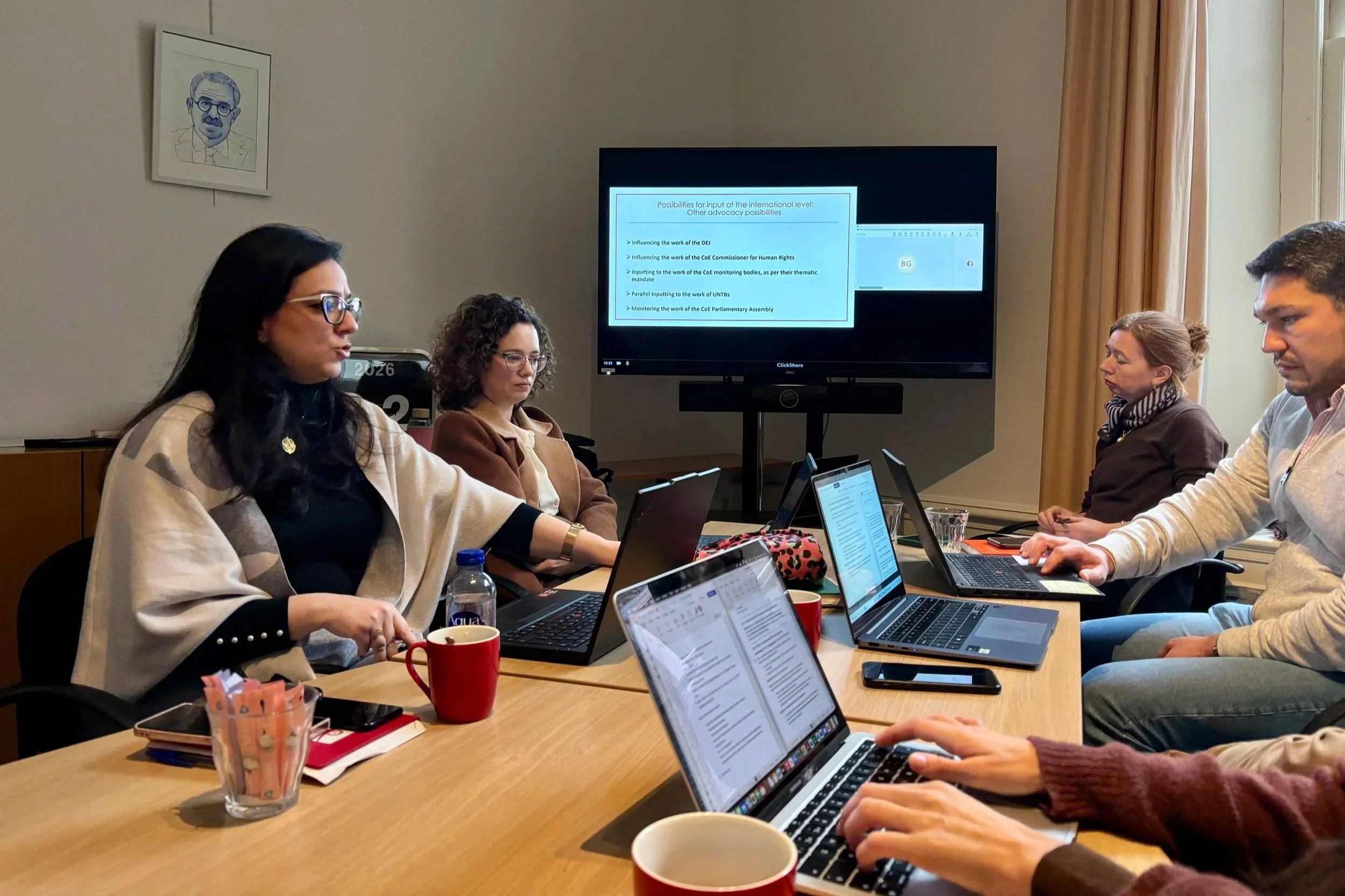
The first day of the kick-off focused on developing a shared understanding of the relationship between the ECHR system and the EU legal order. In this regard, representatives of the organisations composing the consortium, benefited from the insights of experts on both the ECtHR and the CJEU. With regard to the ECtHR, EIN Director, Ioulietta Bisiouli, and EIN Law and Advocacy Officer, Furkat Tishaev, delivered a fast-track introductory training to the execution process of ECtHR judgments. Concerning the CJEU system, we had the pleasure to welcome two experts, Kersty McCourt, Senior Advocacy Expert, and Barbara Grabowska–Moroz, Senior Research Fellow and Director of Rule of Law Clinic at CEU Democracy Institute. Kersty provided participants with an overview of the litigation avenues before the CJEU and of the mechanisms available to enforce compliance with the Luxembourg Court’s judgments, as well as the margins and means available to civil society for influencing the procedure. Barbara Grabowska-Moroz focused her presentation on how courts interact within a multi-layered European legal system and what this means for rule of law litigation. She addressed litigation based on the European Convention on Human Rights and the EU Charter of Fundamental Rights as part of a broader EU framework, highlighting the scope for interaction between these legal avenues rather than treating them as separate tracks.
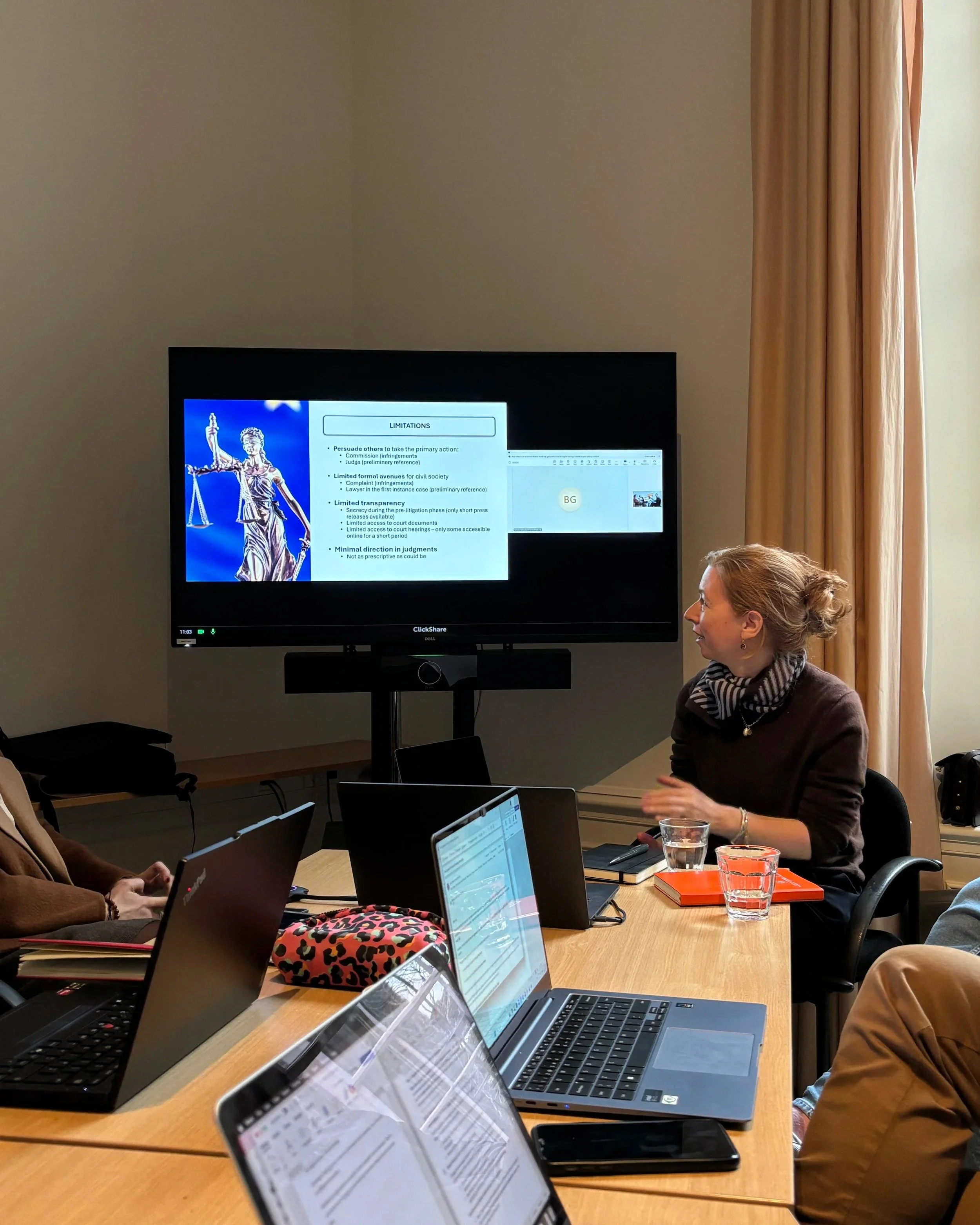
These discussions directly informed the reflections around the development of one of the project’s key outputs: a digital toolkit to support civil society in using the EU Charter and in monitoring the implementation of European court judgments. Within this context, the ECHR system offers relatively clear procedural pathways for litigation, including opportunities for third-party interventions and broader civil society engagement. It is further supported by a well-established framework for the supervision of the execution of ECtHR judgments, overseen by the Committee of Ministers of the Council of Europe. This system enables civil society, national human rights institutions (NHRIs), and international organisations to contribute information and engage in follow-up processes. However, such engagement often depends on sustained advocacy and political follow-up, which can be difficult to maintain without the appropriate resources. By contrast, the CJEU operates within the EU legal order and provides potentially stronger enforcement mechanisms, notably through infringement proceedings and the binding nature of preliminary rulings. Access to the Court, however, remains structurally more complex. It requires a clear connection to EU law, the mobilisation of Charter-based arguments within its scope, and, most commonly, a preliminary reference from a domestic court under Article 267 TFEU.
Across participating countries, implementation emerged as the least transparent and most under-supported phase, particularly in relation to CJEU judgments. While litigation pathways under the ECtHR are generally better understood, the strategic use of CJEU judgments for follow-up advocacy and monitoring remains underdeveloped. Practitioners face both knowledge and capacity gaps, including limited familiarity with the domestic application of the Charter, uncertainty regarding implementation and post-judgment strategies, and insufficient resources to ensure sustained engagement.
Against this backdrop, participants agreed that SURE must go beyond outlining litigation pathways. The project should place explicit emphasis on implementation and post-judgment strategies, clarifying both the strengths and structural limitations of each system, and providing practical and accessible tools tailored to the needs of practitioners and civil society actors working to advance human rights protection.
Strategic avenues for civil society and lawyers
Discussions also explored the practical avenues for engagement from civil society and legal actors once a judgment has been delivered. These include:
Charter-based litigation at the national levelPreliminary references to the CJEU;
Rule 9 submissions to the Committee of Ministers in the ECtHR system;
National-level advocacy and monitoring efforts.
In the rule of law context, litigation before the CJEU has so far relied predominantly on Article 19 TEU rather than directly on Charter provisions. As a result, Charter-based jurisprudence in systemic rule of law cases remains relatively limited. At the same time, recent EU legislative developments — including the European Media Freedom Act (EMFA), the Digital Services Act (DSA), the AI Act and the Anti-SLAPPs directive — create new opportunities for Charter-based arguments within the scope of EU law. However, persistent implementation challenges at the national level continue to limit the transformative potential of these instruments. While direct judicial dialogue between the ECtHR and the CJEU remains limited, coordinated or parallel strategies across both systems may, in certain contexts, amplify pressure and visibility. Beyond litigation, civil society engagement with the EU Rule of Law Report process was identified as a particularly important avenue for raising implementation concerns at the EU level. However, such engagement requires sustained effort, credible evidence, and adequate resources.
From theory to practice
The delivery of a judgment does not mark the end of the life of a case; in many instances, it is the beginning of a complex implementation phase. Obstacles to effective implementation include limited domestic expertise, fragmented advocacy efforts, insufficient political will, and lack of structured follow-up. For this reason, SURE will prioritise the development of a practical toolkit. Rather than offering abstract doctrinal analysis, the toolkit will:
Provide guidance on monitoring and advocacy strategies;
Explain when and how to use Charter-based arguments;
Include illustrative case examples from different national contexts;
Analyse why certain implementation strategies succeed while others fail.
The objective is to support civil society in making informed strategic choices and in linking European legal standards to concrete national outcomes.
Why this matters for civil society?
Persistent implementation gaps weaken the effective protection of fundamental rights in practice and the credibility of European legal systems. Civil society actors often lack clear guidance on which legal avenues to pursue and how to sustain post-judgment advocacy. At the same time, evolving EU legislation in areas such as digital regulation, media freedom, and anti-SLAPP protections provides new entry points for Charter-based human rights arguments. Without practical guidance, however, these opportunities risk remaining underutilised. SURE responds to this gap by strengthening the connection between legal standards and their implementation in practice.
What comes next?
The consortium, with the European Implementation Network leading on the development of the toolkit, will now focus on drafting the digital toolkit for CSOs, lawyers, and legal advocates. The toolkit will combine original analysis with selected high-quality existing resources and will emphasise on clarity, usability, and strategic relevance. Further project activities through out the year will include national capacity-building trainings, cross-country exchanges, and advocacy efforts at both national and EU levels. Recognising the increasing pressures facing civil society, including shrinking civic space, funding constraints, and complex political environments, SURE aims to provide timely, structured, and strategic support.
What is SURE?
SURE is an EU-funded project led by the Netherlands Helsinki Committee and implemented by a diverse consortium of European organisations from the Netherlands, Spain, Croatia, Italy: Netherlands Helsinki Committee, Gentium, Human Rights House Zagreb, COSPE, and an international NGO, the European Implementation Network (EIN).
The project aims to strengthen civil society’s capacity to monitor, report on, and advocate for the effective implementation of judgments delivered by European courts. At the same time, it seeks to promote the consistent application of both EU and Council of Europe human rights standards at national level. Learn more about the SURE project here.

Funded by the European Union. Views and opinions expressed are however those of the authors only and do not necessarily reflect those of the European Union or the European Education and Culture Executive Agency (EACEA). Neither the European Union nor EACEA can be held responsible for them.