Standing Up for Rights in Europe: Protecting Fundamental Rights and EU Values by Strengthening Civil Society Engagement in Monitoring and Advocating for the Implementation of European Court Judgments


Across Europe, the implementation of judgments remains a persistent weak link in the protection of fundamental rights. Despite clear rulings by the European Court of Human Rights (ECtHR) and the Court of Justice of the European Union (CJEU), many violations continue unaddressed. This gap between recognition in the law and enforcement in the practice undermines not only individual rights, but also weakens the effectiveness of human rights protection mechanisms as well as public trust in the rule of law and the credibility of European justice systems.

At the same time, the rise of political movements challenging the EU’s foundational values, together with growing securitisation and restrictions on civic space, has further constrained accountability. Civil society organisations and independent institutions increasingly face obstacles in engaging with public authorities or accessing the information needed to monitor compliance. Many lack the legal, technical, and collaborative tools to invoke the EU Charter of Fundamental Rights strategically in their advocacy and litigation efforts.

The Standing up for Rights in Europe (SURE) project responds to this challenge. It seeks to strengthen civil society’s capacity to monitor, report, and advocate for the effective implementation of European Court judgments, while promoting the consistent application of EU and Council of Europe human rights standards at the national level. By reinforcing the bridge between judicial decisions and real-world outcomes, SURE aims to ensure that fundamental rights are not only declared, but fully realised in practice.
 

Why it matters?

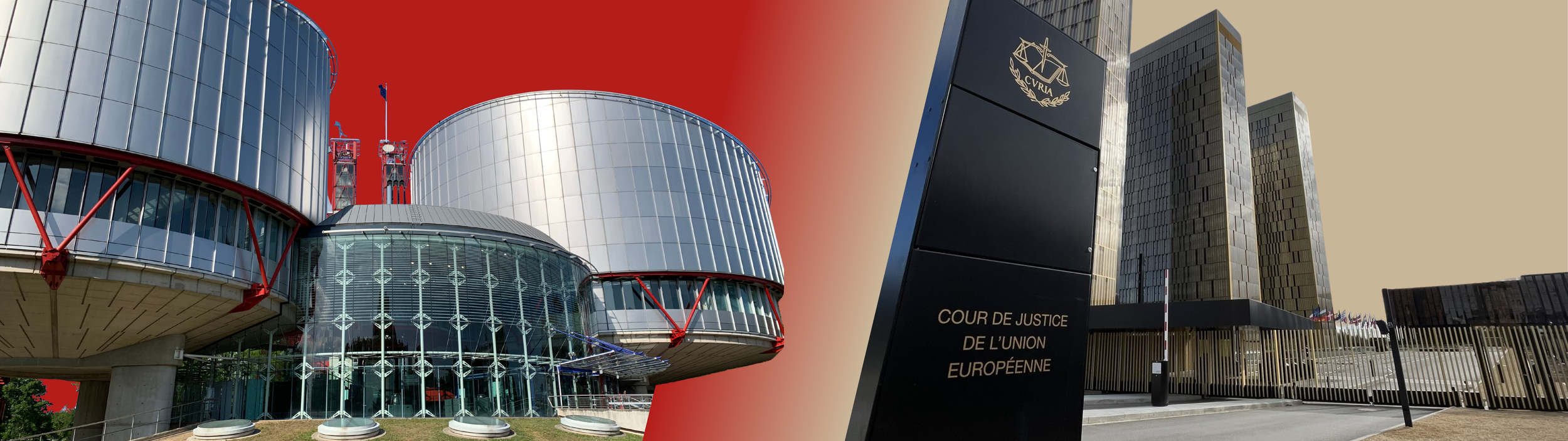
Across EU Member States, persistent non-compliance with judgments of the European Court of Human Rights (in Strasbourg) and the Court of Justice of the European Union (in Luxembourg) reflects systemic shortcomings in the domestic implementation of international and European human rights obligations.

These challenges stem from:

  1. Insufficient follow-up mechanisms to ensure timely and effective execution of court judgments;

  2. Limited awareness and capacity among legal professionals and civil-society actors to use human rights instruments and engage strategically with monitoring procedures;

  3. Fragmented coordination between civil society, National Human Rights Institutions (NHRIs), and state authorities in pursuing enforcement.

Such weaknesses hinder the translation of judicial decisions into policy reforms, remedies, and structural change.

The Standing up for Rights in Europe (SURE) project was conceived to address this implementation gap turning legal victories into tangible outcomes for individuals and communities.

SURE contributes to the European Union’s broader agenda under the European Commission’s Citizens, Equality, Rights and Values (CERV) programme to promote the rule of law and strengthen adherence to the EU Charter of Fundamental Rights. Through targeted capacity building, cross-country cooperation, and coordinated advocacy, the project supports the full and consistent realisation of rights across the EU ensuring that rights recognised in law are also protected in practice.


Our approach

SURE combines three complementary dimensions:

Capacity strengthening

Empowering civil society organisations and legal professionals with the knowledge and tools to use the Charter of Fundamental Rights of the EU, monitor judgments, and engage with European courts.

Cooperation and dialogue

Building structured communication channels between CSOs, NHRIs, and other human rights bodies to exchange best practices and coordinate responses to non-implementation.

Advocacy and awareness

Amplifying evidence and monitoring results through joint advocacy initiatives, policy dialogues, and campaigns aimed at national and EU-level decision-makers.

This integrated model reflects a rights-based and gender-transformative approach, ensuring inclusivity, participation, and diversity of voices across all phases of the project.


The countries and partners involved in the implementation of this project

SURE is implemented by a diverse consortium of European organisations combining legal expertise, advocacy experience, and grassroots engagement.

The Netherlands Helsinki Committee (NHC) coordinates the initiative and ensures strategic oversight, drawing on its long-standing experience in strengthening rule-of-law institutions and supporting human-rights defenders.

The European Implementation Network (EIN) contributes its specialised knowledge on the implementation of European Court judgments and its strong network of legal practitioners across Europe.

COSPE, based in Italy, brings its experience in participatory communication, advocacy, and public-awareness campaigns that connect human rights issues to citizens’ everyday lives.


The Human Rights House Zagreb (HRHZ) supports dialogue and cooperation between civil-society organisations and independent institutions in Croatia and the wider region.

Gentium, an independent research and legal-analysis centre based in Spain, provides expertise in comparative legal studies, monitoring tools, and strategic litigation support.


Together, the partners create a bridge between law, advocacy, and public participation, ensuring that European standards on fundamental rights are effectively translated into local realities.


Expected impact

By the end of the project, SURE will have built a stronger, more connected ecosystem for the protection of rights in Europe. Its impact will be visible across multiple levels:

Lawyers, activists, and national human rights institutions will work together rather than in isolation, joining forces to ensure that European Court judgments lead to real improvements in people’s lives.

Across four EU countries, dozens of CSOs and legal practitioners will have gained the knowledge, tools, and networks to monitor and advocate for the implementation of European Court judgments, and to use the EU Charter of Fundamental Rights more strategically in their daily work.

Through cross-country exchanges and advocacy, SURE will help shift the perception of court judgments from technical legal issues to matters of justice, equality, and accountability that concern everyone.

The project will leave behind a digital monitoring toolkit, shared methodologies, and lasting partnerships between civil society, NHRIs, and policymakers ensuring continued momentum for compliance and transparency.

At its core, SURE seeks to turn the language of courts into lived realities strengthening trust in institutions and advancing the rule of law across the region.


Get involved

  • CSOs & lawyers: join a training or dialogue meeting in your country.

  • Policy makers & NHRIs: partner with us on targeted implementation actions.

  • Journalists & media: cover the real-life consequences of delayed implementation.

Contact: Ilaria Fevola, consortium lead: ifevola@nhc.nl

Project at a glance

  • Duration: 24 months

  • Countries: Croatia, Italy, Netherlands, Spain

  • Lead: Netherlands Helsinki Committee (NHC)

  • Consortium: European Implementation Network (EIN), COSPE, Human Rights House Zagreb (HRHZ), Gentium

  • Programme: Citizens, Equality, Rights and Values (CERV) – CERV-2024-CHAR-LITI


Resources (coming soon)

  • Online toolkit: Using the EU Charter & monitoring European Court judgments

  • National advocacy briefs, statements, Rule 9 submissions, Rule of Law submissions

  • Comparative study on implementation gaps and remedies

  • Stories of change from across the four countries


Funded by the European Union. Views and opinions expressed are however those of the authors only and do not necessarily reflect those of the European Union or the European Education and Culture Executive Agency (EACEA). Neither the European Union nor EACEA can be held responsible for them.

Overview of Rule 9 Submissions in view of the Committee of Ministers' Deputies Human Rights Meeting in December 2025

Overview of Rule 9 Submissions in view of the Committee of Ministers' Deputies Human Rights Meeting in December 2025

From the 2nd to the 4th of December 2025, the Committee of Ministers is meeting for their last quarterly Human Rights Meeting of 2025. During the meeting, the Committee of Ministers will examine 58 leading judgments of the European Court of Human Rights that are pending implementation.

EIN members and partners, other civil society actors, lawyers and applicants have made 49 Rule 9 submissions in 33 leading cases under consideration. The list below sets out an overview of these submissions related to cases on the agenda.

Read More

Overview of Rule 9 Submissions in view of the Committee of Ministers' Deputies Human Rights Meeting in September 2025 

Overview of Rule 9 Submissions in view of the Committee of Ministers' Deputies Human Rights Meeting in September 2025 

From the 15th to the 17th of September 2025, the Committee of Ministers is meeting for their quarterly Human Rights Meeting. During the meeting, the Committee of Ministers will examine 59 leading judgments of the European Court of Human Rights that are pending implementation. 

EIN members and partners, other civil society actors, lawyers and applicants have made 3 Rule 9 submissions in 25 leading cases under consideration. The list below sets out an overview of these submissions related to cases on the current agenda

Read More

EIN Freedom of Expression Closing Conference - Implementing ECtHR Free Speech Judgments: Civil Society Impact, Lessons Learned and Future Strategies

EIN Freedom of Expression Closing Conference - Implementing ECtHR Free Speech Judgments: Civil Society Impact, Lessons Learned and Future Strategies

On 25–26 June 2025, the European Implementation Network (EIN) held the closing conference of its two-year project Protecting Freedom of Expression by Supporting ECtHR Implementation at the Konstantinidis Mansion, home of the Association of Journalists of Macedonia and Thrace in Thessaloniki, Greece. This landmark event brought together around 40 civil society human rights defenders, lawyers, journalists, academics and officials from across Europe to celebrate collective achievements, confront persisting obstacles and chart a path forward for the protection of freedom of expression.

Read More

EIN CONFERENCE - Implementing ECtHR Free Speech Judgments: Civil Society Impact, Lessons Learned and Future Strategies

On 25 and 26 June 2025, the European Implementation Network (EIN) is organising the closing conference of its two-year project ‘Protecting Freedom of Expression by Supporting ECtHR Implementation’. The conference, which will take place at the Konstantinidis Mansion, which houses the seat of the Association of Journalists of Macedonia and Thrace, in Thessaloniki, Greece. It will bring together diverse stakeholders to celebrate our collective achievements and plan future actions, highlighting the importance of peer learning and synergies in tackling shared challenges.

ABOUT THE CONFERENCE

Violations of the right to free speech are central to the crisis of democratic backsliding and the growing tendencies of illiberal democracies in Europe. The healthy functioning of many democracies is currently compromised  by a mixture of restrictive measures and obstacles, including, inter alia, draconian defamation laws that silence journalists and human rights defenders through court proceedings, the excessive ownership of media outlets by the state or those linked to it that undermine free debate, and widespread violence against reporters. The European Court of Human Rights (ECtHR) has issued, to this date, more than 330 leading judgments in relation to the above critical subject-matters finding a violation of the right to free speech, a number of which are linked to “innovative” practices seeking to curtail free expression, including but not limited to the rising use of Strategic lawsuits against public participation (SLAPPs).


ONLINE ATTENDANCE

The event will be livestreamed, with the exception of the Dialogue on the implementation of free-speech-related judgments in Russia. A broasdcasting link will be added to this page ahead of the conference.

It is undeniable that these ECtHR judgments have an invaluable role to play in pushing authorities to undertake necessary reforms. Nevertheless, under the influence of growing and often systemic challenges to free speech across Europe, a significant part of the leading free speech judgments handed down by the ECtHR in the last couple of decades has been faced with increased resistance that hampered their effective implementation. In late 2022, there were more than 105 leading ECtHR judgments on free speech pending implementation, concerning at least 20 different States of the Council of Europe (CoE). These required reforms have the capacity to bring a significant impact on free speech for millions of people.

To contribute to the effort to tackle this problem, EIN ran a two-year project which sought to empower civil society to effectively engage with the implementation process to catalyse  the necessary reforms. The implementation work carried out by project beneficiaries and partners, both at national and international level, has contributed significantly to the positive developments in several European States, a number of which will be presented during the conference.


This final conference of the project will therefore create a platform to reflect on the impact of the numerous and multi-faceted activities carried out in its context, to share best practices and lessons learnt from this extensive and coordinated work on the implementation of freedom of expression judgments, and to lay the ground for further important work on this thematic, which will build on the progress achieved so far. Civil society members involved in the project will have an opportunity to share experiences with peers working in different European States and discuss how similar impact could be generated in other jurisdictions. Furthermore, the conference discussion will focus on measures allowing to ensure the sustainability of the project, so that civil society actors continue taking part in the implementation process and increase their impact. The participation of other actors such as CoE or European Union (EU) representatives, representatives of national human rights stuctures, media and other relevant stakeholders will also allow participants to identify further synergies between all actors concerned.


Overview of Rule 9 Submissions in view of the Committee of Ministers' Deputies Human Rights Meeting in June 2025 

From the 10th to the 12th of June 2025, the Committee of Ministers is meeting for their quarterly Human Rights Meeting. During the meeting, the Committee of Ministers will examine 66 leading judgments of the European Court of Human Rights that are pending implementation. 

EIN members and partners, other civil society actors, lawyers and applicants have made 38 Rule 9 submissions in 36 leading cases under consideration. The list below sets out an overview of these submissions related to cases on the current agenda


Overview of Submissions 


Namazov v. Azerbaijan group 

Violation: Lack of procedural safeguards in disciplinary proceedings, having led to the applicants’ disbarment for breach of professional ethics following verbal altercations with a judge. 

Latest Examination: June 2024 - CM/Del/Dec(2024)1501/H46-5 

Latest Submission(s): 1531st meeting (June 2025) (DH) - Rule 9.2 - Communication from NGOs (European Human Rights Advocacy Centre, Independent Lawyers Network and Free Voices Collective) (29/04/2025) in the Namazov group of cases v. Azerbaijan (Application No. 74354/13) [anglais uniquement] [DH-DD(2025)575] 


Sargsyan v. Azerbaijan 

Violation: Impossibility for persons displaced during the active military phase (1992-1994) of the Nagorno-Karabakh conflict to gain access to their homes and properties in the region; lack of effective remedies. 

Latest Examination: December 2024 - CM/Del/Dec(2024)1514/H46-10 

Latest Submission(s): 1531st meeting (June 2025) (DH) - Rule 9.1 - Communication from the applicant (18/03/2025) in the case of SARGSYAN v. Azerbaijan (Application No. 40167/06) [anglais uniquement] [DH-DD(2025)323]


Koilova and Babulkova v. Bulgaria 

Violation: Lack of a specific legal framework providing for the recognition and protection of the applicants' union as persons of the same sex. 

Latest Examination: First examination 

Latest Submission(s): 1531st meeting (June 2025) (DH) - Rule 9.2 - Communication from NGOs (LGBTI Organisation Deystvie and ILGA-Europe) (20/02/2025) in the case of Koilova and Babulkova v. Bulgaria (Application No. 40209/20) [anglais uniquement] [DH-DD(2025)298] 


Miroslava Todorova v. Bulgaria 

Violation: Disciplinary proceedings and sanctions against the President of the judges’ association in retaliation against her criticism of the Supreme Judicial Council and the executive. 

Latest Examination: June 2024 -CM/Del/Dec(2024)1501/H46-9 

Latest Submission(s): 1531st meeting (June 2025) (DH) - Rule 9.2 - Communication from NGOs (Bulgarian Helsinki Committee) (10/04/2025) in the cases KOLEVI v. Bulgaria (Application No. 1108/02) and Miroslava Todorova v. Bulgaria (Application No. 40072/13) [anglais uniquement] [DH-DD(2025)469] 


Kolevi v. Bulgaria 

Violation: Systemic problem of ineffective criminal investigations with regard to shortcomings which affect investigations concerning both private individuals and law enforcement agents and lack of guarantees for the independence of criminal investigations against the Chief Prosecutor. 

Latest Examination: June 2024 - CM/Del/Dec(2024)1501/H46-10 

Latest Submission(s): 1531st meeting (June 2025) (DH) - Rule 9.2 - Communication from NGOs (Bulgarian Helsinki Committee) (10/04/2025) in the cases KOLEVI v. Bulgaria (Application No. 1108/02) and Miroslava Todorova v. Bulgaria (Application No. 40072/13) [anglais uniquement] [DH-DD(2025)469] 


M.H. and Others v. Croatia 

Violation: Lack of effective investigation into the death of the applicants’ daughter at the Croatian border; inadequate conditions of detention of migrant children; lack of administrative and court diligence and expedition concerning asylum seeking applicants’ detention and asylum proceedings; collective expulsion; violation of the right of individual application. 

Latest Examination: September 2023 - CM/Del/Dec(2023)1475/H46-14 

Latest Submission(s): 1531st meeting (June 2025) (DH) - Rules 9.2 and 9.6 - Communication from an NGO (Border Violence Monitoring Network (BVMN)) (22/04/2025) in the case of M.H. and Others v. Croatia (Application No. 15670/18) and reply from the authorities (07/05/2025) [anglais uniquement] [DH-DD(2025)504-rev] 


Bekir-Ousta and Others v. Greece group 

Violation: Refusal of domestic courts to register associations or dissolution of the applicants’ associations. 

Latest Examination: December 2024 - CM/Del/Dec(2024)1514/H46-17 

Latest Submission(s): 1531st meeting (June 2025) (DH) - Rule 9.1 - Communication from the applicants (25/04/2025) in the case of BEKIR-OUSTA AND OTHERS v. Greece (Application No. 35151/05) [anglais uniquement] [DH-DD(2025)473] 


László Magyar v. Hungary group 

Violation: Life sentence without parole in combination with the lack of an adequate review mechanism, life sentence with parole after 40 years. 

Latest Examination: September 2024 - CM/Del/Dec(2024)1507/H46-12 

Latest Submission(s): 1531st meeting (June 2025) (DH) - Rule 9.2 - Communication from an NGO (Hungarian Helsinki Committee) (22/04/2025) in the Laszlo Magyar group of cases v. Hungary (Application No. 73593/10) [anglais uniquement] [DH-DD(2025)506]


Talpis v. Italy group 

Violation: Failure to comply with the positive obligation to properly assess the risk to life in domestic violence cases and to secure a timely and adequate response. Sexism in the perception of the phenomenon of violence against women, including in court decisions, leading to secondary victimisation. Impunity for domestic violence acts due to a combination of judicial passivity and intervening changes to the prescription regime. 

Latest Examination: September 2023 - CM/Del/Dec(2023)1475/H46-19 

Latest Submission(s): 1531st meeting (June 2025) (DH) - Rule 9.2 - Communication from an NGO (D.i.Re Donne in Rete contro la violenza) (29/04/2025) in the Talpis group of cases v. Italy (Application No. 41237/14) [anglais uniquement] [DH-DD(2025)553] 


Corallo v. The Netherlands 

Violation: Poor conditions of detention on remand in Sint Maarten (Caribbean part of the Kingdom of the Netherlands) pending extradition proceedings. 

Latest Examination: December 2023 - CM/Del/Dec(2023)1483/H46-21 

Latest Submission(s): 1531st meeting (June 2025) (DH) - Rule 9.2 - Communication from an NHRI (Netherlands Institute for Human Rights) (30/04/2025) in the case of Corallo v. the Netherlands (Application No. 29593/17) [anglais uniquement] [DH-DD(2025)554] 


Parascineti v. Romania, Cristian Teodorescu v. Romania group, N. v. Romania & R.D. and I.M.D. v. Romania 

Violation: Overcrowding and inadequate living conditions, treatment and care afforded to patients in psychiatric establishments; unlawful or arbitrary involuntary psychiatric placements and insufficient safeguards against such deprivations of liberty; systematic failure to seek consent to psychiatric treatment and absence of minimum legal safeguards attending the forcible administration of psychiatric treatment to involuntary patients. 

Latest Examination: June 2024 - CM/Del/Dec(2024)1501/H46-26 

Latest Submission(s): 1531st meeting (June 2025) (DH) - Rule 9.2 - Communication from an NGO (Centre for Legal Resources) (02/05/2025) in the cases of B. (No. 2), Cristian Teodorescu group, Ticu, Parascineti, R.D. and I.M.D. (N. group), N. (No. 2), Centre for legal resources Valentin Campeanu, Atudorei and N. v. Romania (Applications No. 1285/03, 22883/05, 24575/10, 32060/05, 35402/14, 38048/18, 47848/08, 50131/08, 59152/08) [anglais uniquement] [DH-DD(2025)559]

1531st meeting (June 2025) (DH) - Rule 9.2 - Communication from an NGO (Centre for Legal Resources) (02/05/2025) in the cases of B. (No. 2), Cristian Teodorescu group, Ticu, Parascineti, R.D. and I.M.D. (N. group), N. (No. 2), Centre for legal resources Valentin Campeanu, Atudorei and N. v. Romania (Applications No. 1285/03, 22883/05, 24575/10, 32060/05, 35402/14, 38048/18, 47848/08, 50131/08, 59152/08) [anglais uniquement] [DH-DD(2025)558] 


Străin and Others v. Romania group & Văleanu and Others v. Romania 

Violation: Ineffectiveness of the mechanism put in place to allow the restitution of or compensation for nationalised property. Continuing ineffectiveness of this restitution mechanism. 

Latest Examination: June 2024 - CM/Del/Dec(2024)1501/H46-27 

Latest Submission(s): 1531st meeting (June 2025) (DH) - Rule 9.2 - Communication from an NGO (Association for Private Property) (19/05/2025) in the cases of Strain and Others group and Valeanu and Others v. Romania (Applications No. 57001/00, 59012/17) [anglais uniquement] [DH-DD(2025)654]


Xenides-Arestis v. Türkiye 

Violation: Continuous denial of access to property in the northern part of Cyprus (individual measures and just satisfaction). 

Latest Examination: September 2024 - CM/Del/Dec(2024)1507/H46-38 

Latest Submission(s): 1531st meeting (June 2025) (DH) - Rule 9.1 - Communication from the applicant (09/05/2025) in the Xenides Arestis group of cases v. Turkey (Application No. 46347/99) [anglais uniquement] [DH-DD(2025)538]